Diagnose Before You Develop: What’s Really Limiting Leadership Capability?
When an organization identifies a leadership problem, the conversation often moves quickly to what needs to be done about it.
The instinct to act is understandable, particularly when the business needs leaders to operate differently and the pressure to deliver results is increasing.
But one question needs to come first:
What’s actually preventing leaders from leading differently?
Without that, even a well-designed intervention risks addressing the wrong problem.
The cost of solving the wrong problem
Consider a common problem: senior executives are routinely pulled into decisions that should be made several levels below them.
That’s the symptom. But what’s actually causing it?
If managers lack judgment → build decision-making capability.
If decision rights are unclear → clarify authority, input, and accountability.
If leaders are punished for getting decisions wrong → change the norms that make escalation safer than ownership.
If senior leaders routinely override decisions → address the behavior at the top.
Same symptom. Four possible causes. Four different solutions.
Decision-making training won’t fix unclear authority. A new decision-rights framework won’t build judgment. And neither will create ownership if leaders have learned that escalation is safer than acting independently.
Solve the wrong problem, and the organization pays twice: for the intervention and for the time lost while the real problem continues to affect execution.
Before deciding what leaders need to learn, organizations need to understand what is preventing them from leading.
What if the problem isn’t the leader but the system?
Leadership capability doesn’t develop through learning alone. It depends on six interdependent conditions that I’ve brought together in the Leadership Capability System.
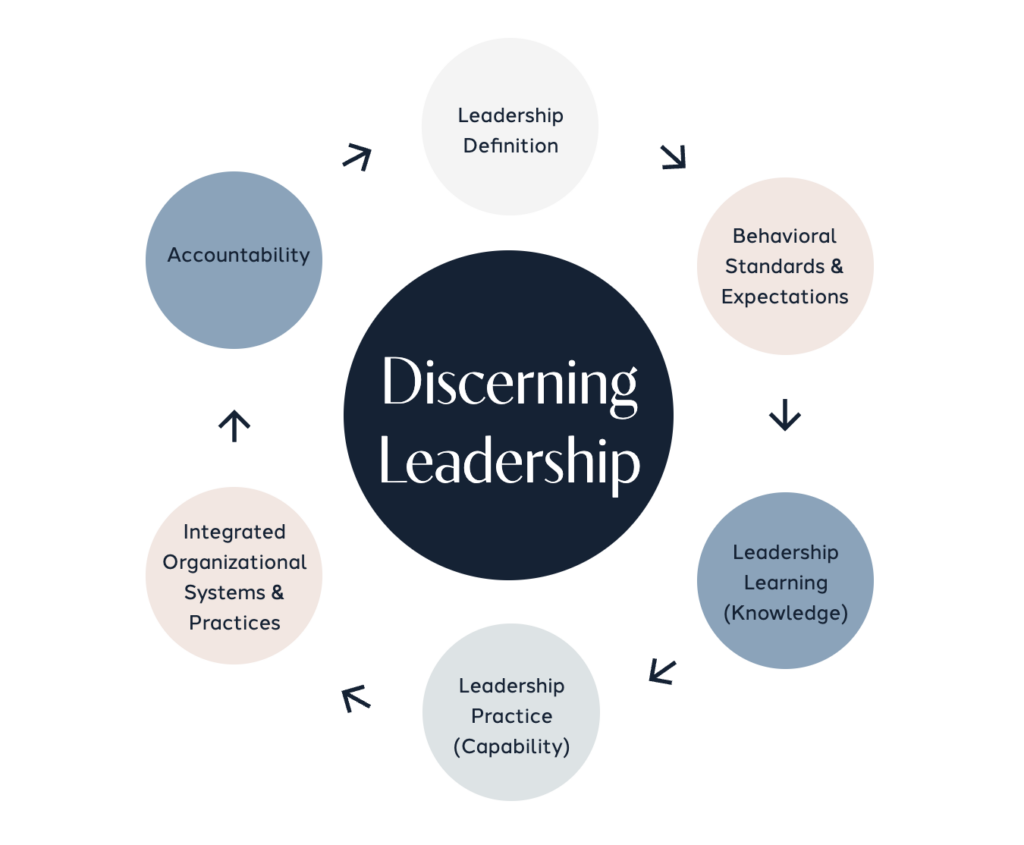
These aren’t six separate initiatives to implement. They need to work together.
An organization may have invested heavily in learning while providing little opportunity for practice. It may have clearly articulated expectations that aren’t reflected in how people are evaluated or promoted. It may have strong processes but no consistent follow-through.
Having the individual components in place doesn’t mean the system is working. What matters is whether they’re aligned and reinforced to produce the leadership capability the business needs.
What the symptoms can tell us
Looking at leadership capability as a system reveals recognizable patterns when conditions are missing or weak.
When leadership isn’t clearly defined, leaders default to their own interpretations, creating inconsistency. When behavioral expectations are vague, ambiguity follows.
Insufficient learning limits what leaders know. A lack of deliberate practice creates stagnation between knowing and doing.
When talent systems send conflicting signals, leaders experience disconnection between what they’re told matters and what the organization actually reinforces. Without accountability, progress drifts and old habits return.
These patterns aren’t definitive diagnoses. They are clues.
A symptom may have several contributing causes, and the components can compound one another. The purpose of diagnosis is to investigate those relationships rather than assume the most visible problem is the root cause.
Diagnosis also requires looking beyond whether a component exists on paper. A competency model doesn’t guarantee clear behavioral expectations, just as a development program doesn’t guarantee opportunities to practice.
The question isn’t simply whether the organization has the right elements. It’s whether they’re working in practice.
A starting point for diagnosing your leadership system
I believe organizations would make better leadership development investments—and get better results—if they approached capability with the same diagnostic discipline they apply to other business challenges.
To help organizations take this more systematic approach, I’ve developed the Leadership Capability Diagnostic.
This free diagnostic examines the six conditions of the Leadership Capability System, helping organizations understand where they have established a strong foundation, where practices are inconsistent, and where gaps may be limiting leadership capability.
I designed it to shift the conversation from What leadership development should we implement next? to What does our organization actually need?
The results aren’t intended to provide a definitive diagnosis or a prescribed solution. They’re a starting point for identifying patterns, asking better questions, and determining where deeper investigation is warranted.
The goal isn’t to invest in more leadership development for its own sake. It’s to make more informed decisions about what will strengthen leadership capability.
If you’re wondering where to start, take the free Leadership Capability Diagnostic to identify where your system is strong and where gaps may be limiting leadership capability.